
AE celebrates the outstanding accomplishments of students and faculty as we close out another school year.

Human Space Exploration Team
Human Space Exploration Team Wins Outstanding Achievement in Research Program Development Award
Professors Masatoshi Hirabayashi and Álvaro Romero-Calvo have received the 2026 Institute Research Award for Outstanding Achievement in Research Program Development Award for their contributions to the Human Space Exploration Team.
The award is set aside for a Georgia Tech research team, preferably composed of both faculty and staff, that creates a new thought leadership platform to significantly expand Georgia Tech’s research and scholarship portfolio.
This year’s awardees, the Human Space Exploration Team, are all members of Georgia Tech’s Center for Lunar Environment and Volatile Exploration Research (CLEVER), a NASA-funded team within the Solar System Exploration Research Virtual Institute (SSERVI) focused on advancing lunar science for future exploration. CLEVER is dedicated to advancing understanding of the Moon’s environment, including the behavior of volatiles and lunar dust. This work directly supports future human exploration efforts, such as the Artemis program and Moon-to-Mars missions. CLEVER builds on foundational research conducted through Georgia Tech’s REVEALS initiative.
Human Space Exploration team members include: Thomas Orlando, Brant Jones, Phillip First, Julie Linsey, Meisha Shofner, Frances Rivera-Hernandez, Masatoshi Hirabayashi, Álvaro Romero-Calvo, Peter Loutsenhiser, and Zhigang Jiang.
Romero-Calvo’s team's contributions to this effort center on lunar dust mitigation and the work of the Low-Gravity Science and Technology (LGST) Lab. Lunar dust is a major operational hazard to human operations on the surface of the moon. Romero-Calvo led CLEVER's Task 3.2, which is developing lunar dust mitigation solutions for astronauts and equipment at the lunar surface together with Professors Orlando, Shofner, Linsey, and their students. “Creating and sustaining this center has taken a lot of work from all of us, so it's rewarding to get this effort recognized at the Institute level.” Romero-Calvo, said, “Georgia Tech has become an international reference in lunar science and technology research, and with NASA's Ignition initiative placing the moon at the center of the agency's effort. I am very excited for what comes next. Lunar dust mitigation is central to this vision: we are ready to support NASA and industry partners as they tackle the challenges of lunar surface operations.”
Hirabayashi's contribution includes exploration of lunar volatiles. The existence of water on the moon, initially thought to be highly dry, raised numerous questions in the community; solving these questions about lunar water is one of NASA's top priorities, and thus, the Artemis program is dedicated to providing insights into these issues. “A better understanding of the water's existence is critical to future in-situ resource utilization,” Hirabayashi said.
He and postdoctoral researcher Ziyu Huang, investigate the origin and evolution of water delivery, targeting solar wind implantation and micrometeoroid impacts as major sources. Hirabayashi also provides insights into how the lunar environment is friendly to the existence of water from multidisciplinary perspectives. He employs impact physics, thermophysical, and geochemical approaches to quantify where water can exist in the moon's surface and subsurface layers. Hirabayashi also contributes to consolidating the team's knowledge and skills so that stakeholders can understand CLEVER's critical role in future lunar explorations.
Kelly Griendling Earns Dual Honors for Excellence in Teaching and Student Engagement
Lecturer Kelly Griendling, AE 2006, M.S. AE 2008, Ph.D. AE 201,1 has received the Student Recognition of Excellence in Teaching: 2025 CIOS Award for AE 1601: Introduction to Aerospace Engineering. This course provides an overview of aerospace engineering principles, introducing students to fixed-wing, rotorcraft, and spacecraft vehicles, as well as potential careers in aerospace engineering.
The award is open to full-time Georgia Tech employees who teach credit courses and who administer the Course Instructor Opinion Survey (CIOS). Each year winners are selected and announced for courses taught during the previous calendar year. Funds for the award were provided by Jack and Frances Mundy or Class of 1940 W. Roane Beard endowment accounts. Forty-one awards are being made to recognize instructors with exceptional response rates and scores on the Course Instructor Opinion Survey (CIOS).
In addition, Griendling received the 2025-2026 Virgil Smith Faculty Teaching Endowment Award, after receiving the award in its inaugural year. She will receive $4,995 to use towards her research. The award supports AE faculty who primarily teach at the undergraduate level and have shown extraordinary encouragement and support to students. It is given annually at the discretion of the AE School chair.
In addition to teaching, Griendling also serves as the K-12 outreach lead for both the AE School and the Georgia Space Grant Consortium, running an expansive outreach program that encourages undergraduate and graduate students to engage with K-12 students around Georgia. She founded and is currently the director of the Science, Technology, and Engineering Program (STEP), an innovative initiative creating valuable engineering experiences for high school students in Georgia.
(text and background only visible when logged in)
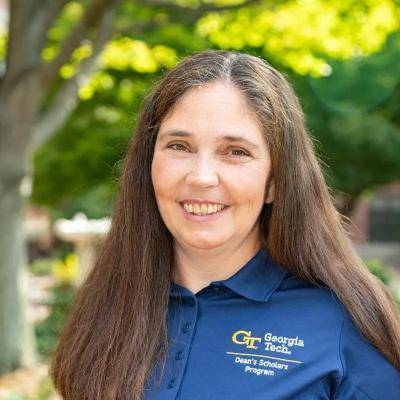
Building Research Leaders: Brian C. Gunter Receives Faculty Mentoring Award
Professor Brian C. Gunter has been honored with the Institute’s Senior Faculty Outstanding Undergraduate Research Mentored Award. The award recognizes faculty members at Georgia Tech who have demonstrated sustained achievement in mentoring undergraduates in research activities. Gunter’s research group has engaged hundreds of undergraduate and graduate students in hands‑on research spanning small satellite missions, space domain awareness, and satellite remote sensing. Students contribute directly to all phases of the development of CubeSat missions, from the initial concept to fabrication to integration/testing to mission operations, with objectives involving novel technologies such as power-beaming, lidar imaging, and integrated photonics. Other activities include tracking space objects with telescopes and developing high-performance computing algorithms to process terabytes of satellite data. These experiences complement the theoretical knowledge that students learn in the classroom, and provide valuable interpersonal and management skills that make his students sought after by the aerospace industry’s top companies.
(text and background only visible when logged in)

Professor Brian Gunter receiving the Institute’s Senior Faculty Outstanding Undergraduate Research Mentored Award
(text and background only visible when logged in)

Zain Pastula and Professor Jerry M. Seitzman at the AE Senior Banquet
(text and background only visible when logged in)
Professor Jerry Seitzman Receives the Most Valuable Professor for the Eighth Time
The Daniel Guggenheim School of Aerospace Engineering’s senior class named Professor Jerry M. Seitzman the 2026 Most Valuable Professor (MVP). This is his eighth time receiving this award since joining Tech. The MVP award is bestowed annually by the Georgia Tech chapter of the Sigma Gamma Tau national honor society. Zain Pastula, Sigma Gamma Tau vice president, and graduating senior, announced Seitzman as the MVP during the AE Senior Banquet.
"Sigma Gamma Tau is very pleased to announce that Dr. Jerry Seitzman is the recipient of this year's Most Valuable Professor Award! Students across GTAE consistently praise Dr. Seitzman's deep knowledge and engaging lectures, leaving them with a true understanding of course concepts while sparking curiosity about why things work,” said Pastula.
“This is the mark of a truly great professor who is shaping the next generation of aerospace engineers."
Seitzman has been teaching at Georgia Tech for 32 years and actively involves students in problem-solving and critical analysis to foster a deeper understanding of fundamentals. Simply put, he loves teaching and making students critical thinkers. He greatly appreciated the teachers in his life who inspired him and helped him grow, beginning with his father. His father encouraged him to think deeply and to understand concepts as thoroughly as possible using the information available, and he introduced Seitzman to the Socratic method of learning and teaching.
The AIAA Associate Fellow conducts research in the Ben T. Zinn Combustion Lab, and his expertise lies in the fields of optical flow diagnostics and sensors, combustion and combustion control, high temperature gas dynamics, laser spectroscopy, flow-field imaging and solid propellant combustion. In addition, he helped transform how combustion is measured and controlled, pioneering advances in planar laser-induced fluorescence (PLIF), laser-induced incandescence, and optical sensing of flame emissions. This work has had broad impact across aircraft and spacecraft propulsion, power generation, and combustion systems.
When asked to offer his secret to success, he responded, “Remember that learn is an active verb, and when we teach, students need to be active and involved during the learning process. Also to echo what one of the students wrote in their nomination for my award, ‘why?’ is always a good question to ask.”
Two Aerospace Engineering Students Awarded National Science Foundation Awards
The National Science Foundation Graduate Research Fellowship (NSF GRFP) recognizes academic excellence, research potential, and the capacity to make significant contributions to science and engineering. As a recipient, they will receive a three-year annual stipend of $37,000, along with a $16,000 cost-of-education allowance to support tuition and fees.
Hebah Fadah Earns the Prestigious NSF Graduate Research Fellowship
Hebah Fadah, a graduating senior in the Daniel Guggenheim School of Aerospace Engineering at Georgia Tech has been awarded the prestigious National Science Foundation Graduate Research Fellowship (NSF GRFP), one of the nation’s most competitive honors for graduate students pursuing research-based degrees in STEM fields.
“Receiving this fellowship means a great deal to me,” she said. “It represents recognition of the effort I’ve put into my work, and it motivates me to keep contributing meaningful research to the field.”
Originally from Yemen, Fadah’s path to aerospace engineering was shaped by an early fascination with mathematics and physics and how they can be used to understand the universe. “Aerospace engineering felt like the natural way to apply that curiosity, not just to understand our environment, but to explore beyond it.” She is graduating this semester from Georgia Tech with a Bachelor of Science in Aerospace Engineering and a minor in quantum physics and going into a Ph.D. program.
Her interest in vertical lift and rotorcraft developed alongside a broader fascination with spacecraft and planetary exploration. That interest deepened significantly during her internship at NASA Ames Research Center, where she worked on the Mars Sample Return helicopter concept. “That experience exposed me to the unique challenges of operating rotorcraft in extreme environments,” she said. “It made me realize how critical rotorcraft technologies are for planetary exploration and confirmed that this is the direction I want to pursue.”
(text and background only visible when logged in)

Hebah Fadah
She conducts research under the guidance of Professor Juergen Rauleder, while also being mentored at NASA Ames by Natasha Schatzman, AE 2011, M.S. AE 2014, Ph.D. AE 2018. Fadah’s research focuses on improving aerodynamic performance prediction by making computational fluid dynamics (CFD) simulations faster and more efficient. By integrating machine learning and quantum-inspired methods into traditional CFD frameworks, her work aims to accelerate simulations while maintaining high levels of accuracy.
“As aerospace systems become more complex, the ability to quickly and accurately predict aerodynamic behavior becomes increasingly important,” she explained. “My goal is to help bridge that gap by enhancing existing tools so engineers can iterate designs more efficiently.”
As she begins the NASA Pathways Program at NASA Ames Research Center this summer, she is working to align her research more closely with rotorcraft aerodynamics, including applications related to the Mars Sample Return helicopter.
“The flexibility this award provides is incredibly valuable,” she said. “It allows me to pursue ambitious ideas and work on challenging problems that advance aerospace technology.”
Louisa Wood Earns 2026 NSF Graduate Research Fellowship
Louisa Wood, a first-year Ph.D. student in the Daniel Guggenheim School of Aerospace Engineering at Georgia Tech, has been awarded the prestigious 2026 National Science Foundation Graduate Research Fellowship (NSF GRFP), one of the nation’s most competitive honors for graduate students in STEM fields.
Originally from Milwaukee, Wisconsin, Wood’s passion for aerospace engineering began early, inspired by a childhood fascination with rockets and space exploration. “I’ve always been drawn to the complexity and challenge of space systems,” she said. “Aerospace engineering felt like the perfect way to turn that curiosity into something impactful.” She pursued that interest at the Massachusetts Institute of Technology (MIT), where she earned her Bachelor of Science in Aerospace Engineering in 2025.
Wood chose to continue her academic journey at Georgia Tech to work in the Ben T. Zinn Combustion Laboratory, known for its strength in experimental aerospace combustion research. Under the guidance of her advisor, Professor Adam Steinberg, she is conducting advanced research using laser Raman spectroscopy to investigate droplet combustion at micron-scale resolution. Her work focuses on developing diagnostic techniques to better understand how monopropellant droplets simultaneously evaporate and react. This analysis is critical for improving spacecraft propulsion systems.
“This research is about capturing what’s happening in both space and time around a burning droplet,” Wood explained. “By improving how we measure species concentrations, we can build more accurate models that ultimately inform the design of more efficient and reliable propulsion systems.” Her work aims to support the modeling of these complex processes by mapping detailed chemical interactions around the droplet as it burns.
(text and background only visible when logged in)

Louisa Wood
Despite entering graduate school with no prior experience in laser diagnostics, Wood quickly built a strong experimental foundation. “I learned an immense amount in a short time, largely because of the support from my advisor and the other graduate students in the lab,” she said. “It’s been a challenging but incredibly rewarding transition into a new area of research.”
The NSF GRFP provides three years of financial support to graduate students pursuing research-based degrees in science and engineering. Awardees are selected based on the strength of their research proposals, academic achievements, and demonstrated potential for broader impacts. “The GRFP gives me the flexibility to fully focus on my research and continue developing as a scientist,” she said. “It’s an incredible opportunity to pursue work that I’m genuinely excited about.”
In addition to the NSF GRFP, Wood is also a 2025 Georgia Tech Stamps Fellow. The Stamps Fellowship is a cohort-based program that supports leadership development and interdisciplinary engagement across campus. “The Stamps program has been a valuable support network,” Wood noted. “It’s helped me navigate the transition to graduate school while connecting me with students and leaders outside of my field.”
Jared Weitkamp Receives the College of Engineering Honors Award
Jared Weitkamp, a Georgia native from Woodstock, Georgia, is the recipient of the College of Engineering (CoE) Honors Award. These awards are given annually to engineering students with the best academic record from each of the CoE Schools. CoE gives each student a $1,000 monetary award along with a certificate. Weitkamp began his collegiate journey at Berry College, earning a bachelor’s degree in applied physics while competing as a student‑athlete in football. He later transferred to Georgia Tech to complete his second bachelor’s degree in aerospace engineering. He is enrolled in the BS/MS program and will begin working on his master’s degree in the summer while serving as a Graduate Research Assistant in the Aerospace Systems Design Laboratory (ASDL). Weitkamp’s research interests revolve around systems engineering and defense‑related technologies. “I love systems engineering because I get to touch a little bit of everything.” Following completion of his master’s degree in 2027, Weitkamp plans to commission in the U.S. Navy with the goal of flying jets.

Interim College of Engineering Dean Doug Williams and Jared Weitkamp
Alexander Payne Earns the Aerospace Engineering Outstanding Senior Scholar Award
Alexander Payne has been named the recipient of the Aerospace Engineering Outstanding Senior Scholar Award, the AE School’s highest academic honor for graduating seniors. Funded through an endowment established by former AE School Chair Donnell W. Dutton, AE ’40, the $1,000 award is presented annually to the student with the highest cumulative GPA.
An Air Force ROTC cadet, Payne plans to commission into the U.S. Air Force following graduation, continuing a family tradition of excellence and service. His passion for aerospace engineering was inspired by his father, Scott Payne, a Tech graduate in electrical engineering and U.S. Air Force service member. Growing up, Alexander fondly recalled attending air shows and watching his father’s engineering work in the Air Force. Those early experiences sparked his interest in aircraft. He doesn’t remember a time when he wasn’t interested in aircraft.

Interim College of Engineering Dean Doug Williams and Alexander Payne
In addition to having the highest GPA, the Lincoln, Massachusetts native still finds time to pursue outside interest. He is an active member of Outdoor Recreation Georgia Tech (ORGT), part of the Campus Recreation Center, where he serves as a caving instructor. Through ORGT, he has led student trips to caves in Georgia, Alabama, and Tennessee, including descent into the deepest continuous pit, Ellison’s Cave in the United States, a 500‑foot drop.
Payne took his classroom knowledge and put it to the test in industry. Two summers ago, he interned at Honda Aircraft Company in Greensboro, North Carolina, working on the HondaJet as part of the flight controls team. There, he tested the aircraft’s fixtures and components, with a focus on spoiler systems and force‑load limits.
Last summer, he interned at Merlin Labs, a startup in North Kingstown, Rhode Island, developing autonomous pilot technology. Payne supported flight testing for Cessna Caravan aircraft, flying alongside the test crew as a scribe, sitting next to the test conductor during live test operations. This summer, Payne will intern at Wisk Aero in Hollister, California, contributing to the flight test program for Wisk’s electric vertical takeoff and landing (eVTOL) aircraft.
(text and background only visible when logged in)
Isabel Botelho Honored with the Donnell W. Dutton Outstanding Senior Award
Isabel Botelho has been named the recipient of the Donnell W. Dutton Outstanding Senior Award in Aerospace Engineering, a $1,000 honor recognizing exceptional academic achievement within the Daniel Guggenheim School of Aerospace Engineering.
Botelho pairs academic excellence with extensive hands-on experience. For the past two semesters, she has worked in the Ben T. Zinn Combustion Laboratory, gaining what she describes as “brute-force engineering” experience, everything from constructing hardware to plumbing complex piping systems. Currently, her interest lies in propulsion and flight controls, an area she plans to pursue further in industry.

Interim College of Engineering Dean Doug Williams and Isabel Botelho
The Roswell, Georgia native is headed to Boeing in Everett Washington, this summer, where she will intern on flight controls for the 777X aircraft. She brings prior industry experience to the role, having interned last summer at Bell Textron in Texas. There, she supported the engine integration team on the MV-75 tiltrotor aircraft, working with Rolls-Royce engines, conducting flight-region analyses, and contributing to technical reports.
Outside of the classroom, Botelho is a member of the Design Build Fly (DBF) team, serving as team leader for the Society of Automotive Engineers (SAE) Aero Design East competition this spring.
“DBF was one of my most rewarding experiences at Georgia Tech. It allowed me to engage with every aspect of an aircraft while making lifelong friends with my teammates,”
Botelho will return to Georgia Tech this fall through the BS/MS program.
Four Aerospace Students Secure Competitive Vertical Flight Scholarships to Further Their Research
Aerospace engineering students Aleksandr Lutsenko, Isabelle Sanz, Jeremy Seeyave, and Duncan Waanders received more than $15,000 in vertical flight scholarships from the Vertical Flight Foundation (VFF) to use towards their research. These four graduate students will formally accept their awards during the Vertical Flight Society’s (VFS) 81st Annual Forum & Technology Display, taking place May 20-22, in Virginia Beach, Virginia.

Vertical Flight Society Scholars at the VFS Forum 82 held in West Palm Beach, Florida
Aleksandr Lutsenko, AE 2024, AP 2024 received the Stratford Chapter Scholarship, in honor of the VFS Stratford, Connecticut Chapter’s historic and prolific stewardship to VFF. Lutsenko’s research focuses on urban air mobility (UAM) vehicles and their aerodynamic interactions with the environment. He currently uses the Lattice Boltzman Method (LBM) to enable real-time aerodynamic simulations suitable for flight simulators and rapid design iteration.
“It was a great pleasure being selected for a VFF scholarship and have my name listed amongst the previous star-studded winners. I aim to work harder and further cement my name on such lists,” said Lutsenko.

Aleksandr Lutsenko
Isabelle Sanz, received the Franklin D. Harris Scholarship, honoring his contributions and 65 years of dedicated service and numerous contributions to the rotorcraft industry. Sanz, originally from Huntersville, North Carolina, earned a bachelor’s degree in mechanical engineering from Duke University. Georgia Tech stood out as the ideal institution for Sanz to pursue doctoral research at the intersection of aeroelasticity, applied mathematics and engineering design.
Advised by Prof. Cristina Riso, Sanz investigates new computational methods to account for dynamic aeroelastic phenomena earlier in the design phase of fixed-wing and vertical lift aircraft. This work supports improved performance, enhanced safety and reliability, and reduced development time and cost for increasingly flexible aerospace structures.
“This award not only provides me with additional financial support for my education but also enables me to attend and present my research at events such as the VFS Annual Forum, expanding my engagement with the rotorcraft community both at Georgia Tech and beyond,” said Sanz.

Isabelle Sanz
Jeremy Seeyave, M.S. AE 2022, received the Charles C. Crawford Scholarship, named in memory of the of the former Army Aviation development leader, Georgia Tech Research Institute (GTRI) researcher and past VFS chair. Advised by Professor Marilyn Smith, Seeyave’s doctoral research focuses on developing machine-learning-based reduced order models to accurately and rapidly forecast urban canyon airwakes for real-time operational decision-making.
“This award is a powerful validation of my research and signifies the Vertical Flight Society’s trust in my commitment to making safe, real-time urban flight a reality,” he said. “Beyond the financial support, it’s an incredible motivator to continue building the tools that will help operators navigate complex urban environments with confidence.” He thanked his advisor Prof. Smith for her support and mentorship.

Jeremy Seeyave
Duncan Waanders received the Dr. Robin Gray Scholarship, honoring the beloved Georgia Tech professor who taught generations of aerospace engineering students. Originally from Bangor, Maine, Waanders earned degrees in mechanical engineering and mathematics from Calvin University before pursuing his aerospace engineering degree at Georgia Tech. At Tech, he conducts mid-fidelity computational aerodynamic simulations of rotorcraft in naval environments in the Computational and Experimental Rotorcraft Engineering and Aerodynamics Laboratory (CEREAL) led by Professor Juergen Rauleder.
“This award can serve as a credential for my research and my qualifications upon graduation, in addition to opening up connections and networking opportunities,” said Waanders.

Duncan Waanders
AE Postdoctoral Scholar Receives Best Ph.D. Thesis Award from Sigma Xi
Scott Guan received the Best Ph.D. Thesis Award from the Georgia Tech Chapter of Sigma Xi, The Scientific Research Society, for his thesis Scalable and Provable Decision-Making for Large-Population Multi-Agent Systems in Complex Domains. His research focuses on developing theoretical algorithms for decision-making in large-scale, multi-robot systems. His work emphasizes designing the "brain" or control algorithms that enable numerous robots to collaborate, coordinate, and sometimes compete within extensive environments, addressing challenges related to scalability both in terms of the number of agents and the size of the operational area. Rather than limiting studies to small laboratory spaces, his research focuses on large-scale environments spanning kilometers and systems involving thousands of robotic agents. Currently he is a postdoctoral Ph.D. advisor working with Professor Panagiotis Tsiotras. After he completes his postdoctoral research, he plans to go to the University of Texas, Austin to conduct more research before seeking faculty positions.
Michael Hartin Receives Best M.S. Thesis Award from Sigma Xi
Michael Hartin received the Best M.S. Thesis Award from the Georgia Tech Chapter of Sigma Xi, The Scientific Research Society for his thesis titled "Predicting Aeroelastic Limit-Cycle Oscillations Due to Freeplay Nonlinearity Using Pre-Critical Output Data." This thesis presents a new way to predict a type of unwanted self-sustained oscillation that can occur when parts of a structure have “looseness” or slack. These persistent oscillations can reduce performance and, over time, lead to wear, fatigue, or even structural failure. This problem can affect aerospace systems with moving parts, such as control surfaces, tilting propellers, or rotors, as well as other mechanical systems where parts move relative to each other
Hartin will graduate this spring, with his master’s degree supported by the distinguished Department of Defense SMART Scholarship.
After graduation, he will become a flight test engineer with the 412th Test Wing at Edwards Air Force Base. “I would like to express my most sincere gratitude to the SMART Scholarship program, which not only allowed me to pursue my graduate studies, but also connected me to this opportunity.”
(text and background only visible when logged in)

Professor Panagiotis Tsiotras and Scott Guan
(text and background only visible when logged in)

Michael Hartin
Two AE Standouts Earn Top Commercial Space Scholarship
Marissa Schwarz, a master’s student in the Daniel Guggenheim School of Aerospace Engineering, and Harshini Sivakumar, AE 2021 have been selected for the prestigious Matthew Isakowitz Commercial Space Scholarship.
This summer, Schwarz will intern at The Aerospace Corporation as a spacecraft and ground concept design intern and Sivakumar will intern at McKinsey & Company supporting their Aerospace and Defense projects.
The Matthew Isakowitz Commercial Space Scholarship supports students who demonstrate leadership, technical excellence, and a strong interest in bridging engineering innovation with policy, strategy, and commercialization. Scholars gain exposure to industry leaders and build a professional network across the commercial space sector.
Schwarz is a first-year graduate student and a member of the Space Systems Optimization Group. She earned her undergraduate degree in mechanical engineering from Vanderbilt University, where she served as simulations lead for the Vanderbilt Aerospace Design Lab and served on the board of Vanderbilt’s Society of Women Engineers.
Schwarz’s academic and professional interests center on the intersection of space systems engineering, policy, and market strategy. Prior to enrolling at Georgia Tech, she worked as a consultant at Deloitte, where she supported space-focused initiatives for government and public sector clients. Her graduate studies build on that foundation, strengthening her technical expertise while exploring how regulatory and strategic decisions shape real-world aerospace systems.
“At Georgia Tech, I wanted to deepen the technical foundation behind the strategy work I had already begun,” said Schwarz. “This scholarship aligns closely with my interest in understanding how engineering constraints, policy decisions, and commercial incentives interact.”
Sivakumar is currently an MBA student at Harvard University where she chose to study business to diversify her expertise and apply it across the space industry. “Business school for me, was an opportunity to expand my horizons, step out of my comfort zone, and learn how to apply my engineering toolkit to a whole new experience,” she said.
“I think this scholarship is really focused on filling an important niche in commercial space, specifically how policy and business are shaping the industry. I want to be able to blend my technical and business skillsets to be a leader in the space industry, and this scholarship is an excellent starting point to be able to do so.”

Marissa Schwarz
(text and background only visible when logged in)

Harshini Sivakumar
While at Tech, she served as the president of the School of Aerospace Engineering Student Advisory Council (AESAC), national vice-president of Women of Aeronautics and Astronautics (WoAA), mentor of the Yang Aero Maker Space, member of the Sigma Gamma Tau Honor Society, and an American Institute of Astronautics and Astronautics (AIAA) Diversity Scholar. She also serves as a Mentor in Resident with the Daniel Guggenheim School where she helps current AE students with career advice and guidance.
Grace Kang Lands an Outstanding Undergraduate Researcher Award
Grace Kang has received the Outstanding Undergraduate Researcher Award from the Undergraduate Research Opportunities Program (UROP) on behalf of the College of Engineering (CoE). Recipients are selected based on their undergraduate research involvement, achievements, and leadership.
The Illinois native will receive $250 and a certificate. She is a third-year, aerospace engineering student currently enrolled in the BS/MS program. Kang’s works in the High-Power Electric Propulsion Laboratory (HPEPL) where she is involved in research under a Defense Advanced Research Projects Agency(DARPA) funded project called Charge Harmony to develop a simulation tool for an air breathing thruster that uses microwave energy to generate thrust. Her work on this project centers on electronic propulsion that enables spacecraft to operate in very low Earth orbit (VLEO), a region closer to Earth than traditional low Earth orbit (LEO). While most satellites operate in LEO, VLEO presents different challenges due to increased drag and other Earth-based environmental conditions, which directly impact simulation results.
The DARPA-funded project supports a collaboration between Georgia Tech and Penn State. Georgia Tech is responsible for developing thermal and fluid simulations, with Kang working alongside aerospace graduate student Julian Lopez. Penn State leads the ideation, drag analysis, and overall project management.
(text and background only visible when logged in)

Grace Kang
“On the technical side, this highly novel idea has allowed me to engage in research that few others are pursuing, enabling me to learn about thermal stimulation and flow simulation. On the project management side, it was challenging being the lead of a research project like this and dividing up the work. But it was a good learning experience that I'm very grateful for. Research has given me an outlet where I can expand my knowledge,” said Kang.
She is currently interning at Blue Origin in Cape Canaveral, Florida where she is getting first-hand insight into the aerospace industry while exploring how cutting-edge equipment and practices can be brought back to enhance research at Georgia Tech.
Georgia Tech Student Wins Inaugural USG Innovation & Entrepreneurship Competition
Georgia Tech student Akos Vida won first place and a $15,000 prize at the inaugural University System of Georgia Innovation & Entrepreneurship Competition for AdaptaPlay, a modular gaming controller add-on designed to improve accessibility for players with disabilities. An aerospace engineering major, Vida created the device to allow users to customize controls to their individual needs, helping foster inclusion and reduce social isolation through gaming. The two-day competition featured student teams from all 25 USG institutions, with projects judged on originality, feasibility, and market potential. Vida was also recently a finalist in Georgia Tech’s InVenture Prize competition.
(text and background only visible when logged in)

Related Story
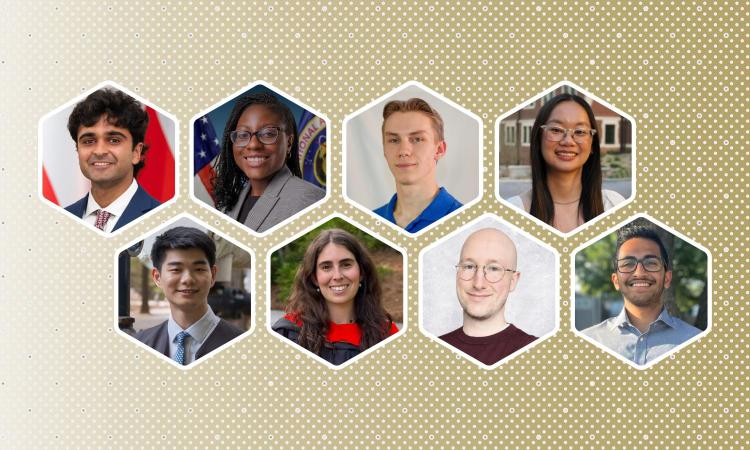
What's Next for the Class of 2026 as They Forge Their Own Paths
The sky is not the limit for these amazing graduates.